
How to Choose a Wedding Photographer When You Have a Sea of Options
There is a particular point in wedding planning when you realize you have looked at so many photographers that everyone’s work is starting to blur together.

You have one photographer whose images are bright and colorful, another whose work is dark and cinematic, someone who describes themselves as documentary, someone else who says editorial, and at least three people whose Instagram feeds look suspiciously similar. Everyone has beautiful work. Everyone has five-star reviews. Everyone seems lovely.
So how are you actually supposed to choose?
After photographing more than 200 weddings, I’ve found that most couples aren’t struggling to find a photographer. They’re struggling to figure out which photographer is actually right for them. That’s a different question, and the answer has much less to do with finding the person with the prettiest Instagram feed.
Your photographer is going to be with you through some of the most personal parts of your wedding day. They’ll be there when you’re nervous, when your timeline changes, when your family is trying to gather for portraits, when your makeup is being touched up, when the dance floor gets completely out of hand, and when you finally get a few quiet minutes with your new spouse. You want someone whose work you love, but you also want someone you trust to be part of the day itself.
Start With the Photographs You Actually Want
Before you start comparing photographers, spend some time figuring out what you want your own wedding photographs to feel like.
This sounds obvious, but it is surprisingly easy to get distracted by what photographs well on Instagram. Maybe you save a beautiful editorial portrait because the light and architecture are incredible, but what you really care about most is having photographs of your grandparents laughing with your cousins or your friends losing their minds on the dance floor. Maybe you love beautifully composed portraits but don’t want your entire day to feel posed. Maybe you want photographs that feel polished enough for an album on your coffee table but still have all the weird, wonderful little moments that actually made the day yours.
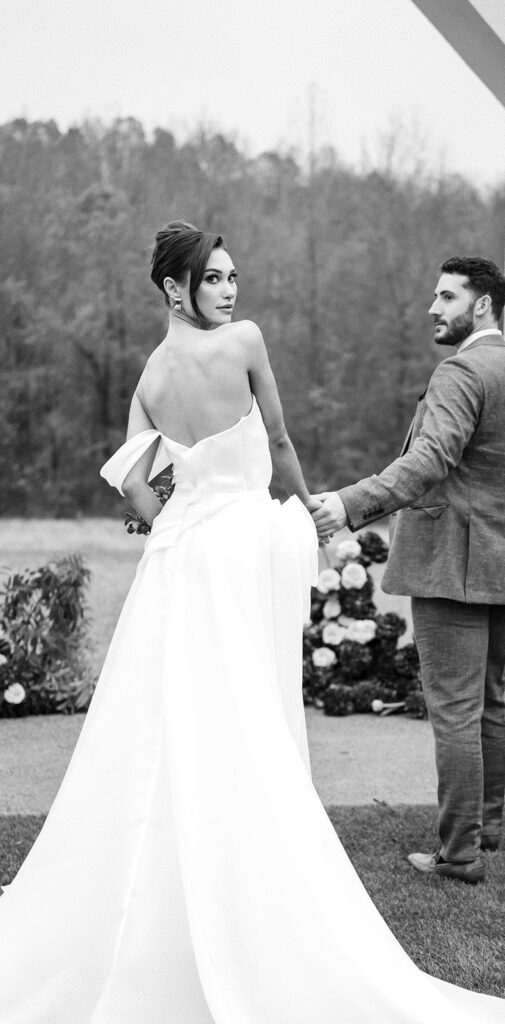
That’s why I don’t think couples need to choose between documentary and editorial photography. The best wedding galleries have room for both. Some moments deserve to happen completely on their own. Others benefit from a photographer stepping in, finding the light, giving you a little direction, and creating something intentional. My own approach blends documentary, portrait, and editorial photography because a wedding day has too many layers to tell the whole story one way. I wrote more about that approach in Why I Shoot Documentary, Portrait, and Editorial.
The important thing is finding someone whose approach matches the experience you want to have, rather than choosing a style label because it sounds right.
Look at Full Wedding Galleries, Not Just Instagram
Instagram is very good at showing you someone’s best fifteen photographs.
That is exactly what makes it so difficult to use when you’re choosing a wedding photographer.
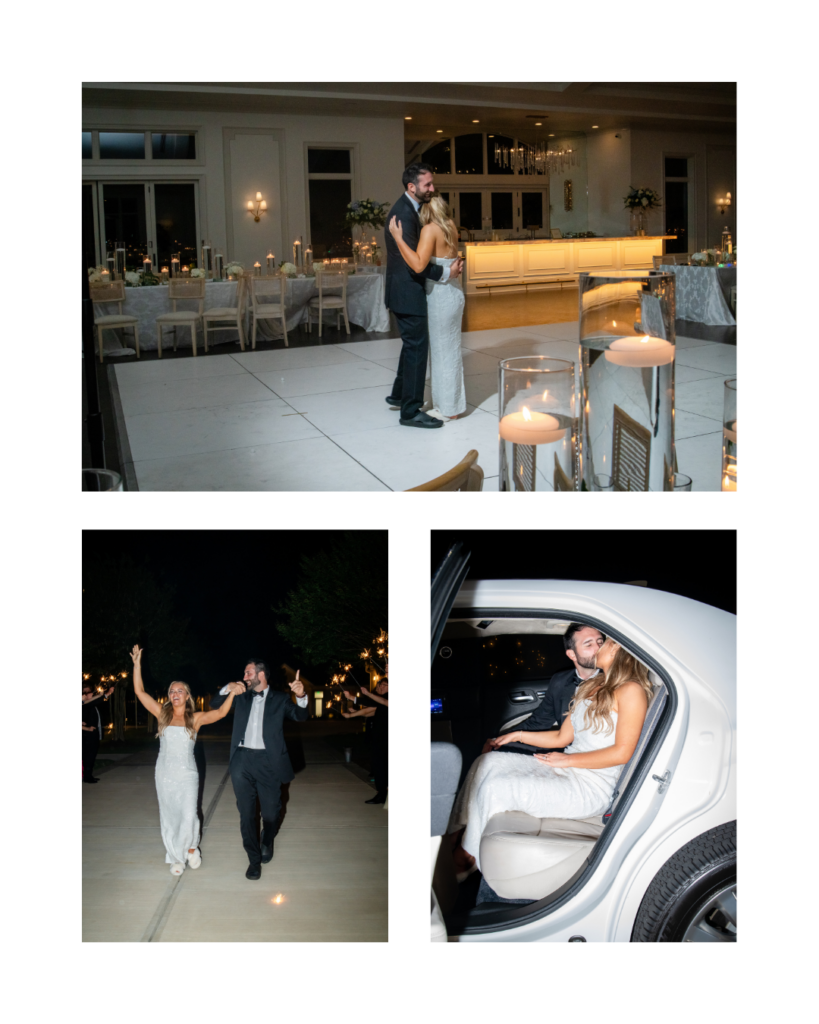
A wedding gallery needs to do much more than produce a handful of beautiful portraits. Look at what happens between those portraits. How does the photographer handle getting ready? Are there photographs of the parents, grandparents, wedding party, and guests? Do the ceremony photographs feel intentional without becoming repetitive? What happens once the sun goes down? Are the reception photographs actually interesting, or does the gallery seem to run out of steam once dinner is served?
I always recommend asking to see at least one or two complete wedding galleries before making a decision. You’re looking for consistency, but you’re also looking for storytelling. A photographer can make one beautiful portrait at golden hour. A wedding photographer has to make something meaningful out of every part of the day, including the parts that don’t come with perfect light or a dramatic backdrop.
You should also look at how much of the actual wedding day is represented. If a photographer’s portfolio is almost entirely portraits, that tells you something. If you want a photographer who documents the people, the energy, the quiet moments, and the party along with the portraits, make sure you’re actually seeing that in their work. And that’s why I often link full galleries at the end of my wedding recap blogs so you don’t have to hunt!


Pay Attention to How They Work, Not Just What They Shoot
This is where choosing a wedding photographer gets a little more personal.
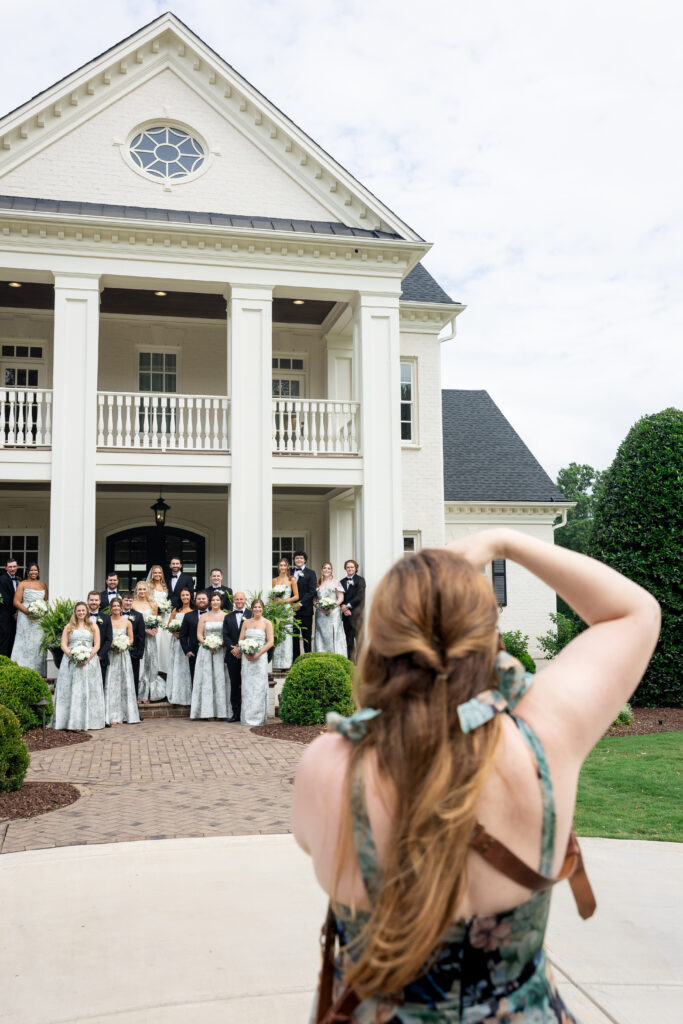
Your photographer isn’t simply showing up for eight or ten hours with a camera. We’re there while you’re getting ready, helping keep things moving, finding missing family members, pinning boutonnieres, fixing veils, adjusting timelines, and figuring out what to do when the weather suddenly changes. Sometimes the most valuable thing a photographer does all day never appears in the gallery.
I’ve carried stain remover, safety pins, tissues, snacks, phone chargers, umbrellas, and enough hair ties to open a salon. I’ve photographed ceremonies that started early, timelines that fell behind, dresses that ripped, transportation that arrived late, and family photographs that somehow involved considerably more people than anyone originally told me about.
Those are the moments when the experience of working with your photographer really matters.
A photographer who knows how to organize family photographs can keep them from taking over the day. In my own process, I build the family photo list before the wedding and organize the groupings ahead of time so everyone knows what we’re doing when the time comes. If you’re curious about what that looks like, The Family Photo List: How I Keep Portraits Fast, Flawless, and Stress-Free goes much deeper into that process.
The same thing applies to coverage. Instead of choosing a collection based solely on the number of hours, look at what is actually happening during those hours. How Many Hours of Wedding Coverage Do We Need? breaks down why I think the better starting point is figuring out which parts of the day matter most to you.


Make Sure You Actually Like Them
This one sounds almost too simple, but it matters.
You are going to spend a lot of time with your photographer. More than most of your other vendors, in fact. Your planner is managing the overall event. Your florist may be gone before the ceremony begins. Your DJ is primarily focused on the guests. Your photographer is moving alongside you for most of the day.
You don’t need your photographer to become your new best friend. But you should feel comfortable around them.
This is one reason I think a consultation is worth having before you book. Pay attention to how the conversation feels. Do you feel like you can ask questions without feeling silly? Do they listen to what you actually care about? Are they interested in your wedding beyond the date and venue? Do you feel calmer after talking to them, or more overwhelmed?
Your photographer is going to be in the room when you’re putting on your dress. They’re going to be standing close during some very emotional moments. They’re going to give you direction when you’re probably not thinking about how to stand. You want someone who makes that feel easy.
Experience Matters More Than You Think
There is a difference between knowing how to take a beautiful photograph and knowing how to photograph a wedding.
Weddings move quickly. There are dozens of people, competing priorities, changing light, unpredictable weather, family dynamics, tight timelines, and moments that happen once and are gone before anyone has time to recreate them. An experienced wedding photographer has learned how to anticipate those things rather than simply react to them.
That experience also changes the way your day feels. A photographer who knows how long family photographs actually take can help you build a realistic timeline. Someone who understands lighting can tell you when sunset portraits need to happen. Someone who has photographed hundreds of ceremonies knows where to stand without becoming part of the ceremony themselves.
And they should understand that your photographs are only one part of the day. You shouldn’t spend your entire wedding being pulled away from the people you invited to celebrate with you. A thoughtful photographer should know how to create beautiful images while still giving you time to actually experience your wedding. I wrote more about that in How to Make Sure Your Wedding Photos Don’t Take You Away From Your Guests All Day.
You’re hiring someone who has already encountered a lot of the things that can make a wedding day complicated and knows how to keep moving when they happen.
Don’t Let Price Be the Only Thing You Compare
Photography pricing can be confusing because you’re rarely comparing exactly the same thing.
One photographer might charge $4,000 for eight hours. Another might charge $7,000 for eight hours. Another might charge more for a collection that includes a second photographer, engagement session, albums, or additional services. Looking only at the number can make it seem like you’re comparing identical services when you’re really not.
The cost of wedding photography reflects much more than the hours your photographer spends holding a camera. There is planning before the wedding, communication, timeline development, equipment, insurance, travel, backups, editing, gallery delivery, and years of experience behind the work.
Your budget absolutely matters. It should. But once you’ve narrowed your choices to photographers whose work and pricing make sense for you, I’d look closely at the experience you’re getting for that investment rather than automatically choosing the lowest number.
And if you’re trying to figure out what wedding photography should actually cost in North Carolina, How Much Should You Spend on Wedding Photography? is a helpful place to start. The important thing is understanding what you’re comparing before deciding whether one photographer is actually more expensive than another.
Your wedding photographs are one of the few things from the day that you’ll continue interacting with long after the flowers are gone.


Ask the Questions That Actually Matter
Once you’ve narrowed your list down, this is where your conversations with photographers become useful.
Ask how they approach portraits. Ask how they photograph real moments. Ask how they help build timelines. Ask how they handle family photographs. Ask what happens if it rains. Ask who will actually be there on your wedding day. Ask how your photographs are backed up. Ask what happens if an emergency prevents them from photographing your wedding.
The weather question is especially worth asking. Not because you need a photographer who can somehow control the forecast, but because you want to know whether they have a plan when the forecast changes. A good photographer should be able to adapt without making you feel like the entire day is falling apart. If rain is one of your biggest wedding-day anxieties, What Happens If It Rains On Your Wedding Day? explains how I approach those days and why I have a Rainy Day Promise for qualifying Raleigh-area weddings.
And then ask yourself the question I think matters most:
Do I trust this person with my wedding day?
Not just your photographs. Your actual wedding day.
Do you trust them to notice when your grandmother needs a chair? To keep family portraits moving without making everyone miserable? To recognize when you need a minute alone with your partner? To step in when something needs fixing and disappear when it doesn’t?
Those things don’t show up on a pricing guide, but they become part of your experience.
You Don’t Have to Find the “Best” Photographer
There is no objectively best wedding photographer.
There is the photographer whose work makes you stop scrolling, whose approach makes sense for the way you want your wedding to feel, and who you trust enough to hand over a pretty important part of the day.
If you love heavily directed portraits and want most of your day to feel polished and intentional, find someone who works that way. If you care most about candid photographs and want your photographer to stay mostly in the background, find someone who understands that. If you want both, look for someone who knows how to move between the two without making either feel out of place.
And if you’re getting married in North Carolina, you may want to start with The Ultimate Guide to Wedding Photography in North Carolina, which covers the bigger picture of choosing a photographer, understanding pricing, building your timeline, and figuring out what matters most before you book.
You don’t need to determine which photographer on the internet is “the best.”
You need to find the one who feels like the right fit for your wedding.
How to Keep Your Search Simple
It’s easy to approach wedding photography like you’re shopping for groceries. Look at all the options, compare the labels, read the reviews, and eventually decide which one makes the most sense. But photographers aren’t products sitting on a shelf. We’re custom service providers, and a lot of what makes the experience right for you won’t show up in a price list or an Instagram grid.
Give yourself a time limit. Spend an hour looking at photographers, then choose three you genuinely like and reach out. That’s enough. You’re not going to find the perfect photographer by opening 47 more browser tabs, and the photographer who is right for you probably isn’t some hidden gem you have to uncover through page 19 of Google. The good photographers are not hiding.
Once you’ve narrowed it down, go deeper instead of wider. Look at full galleries. Read about how they work. Talk to them. Pay attention to whether you feel comfortable, understood, and confident in the way they approach your wedding. That information will tell you far more than scrolling through another hundred pretty photos.
The goal isn’t to find every possible option. It’s to find a few photographers whose work you love and whose approach feels like a fit, then choose the person you trust to be there with you when the day actually happens.
Looking for a Wedding Photographer in North Carolina?
If you’re planning a wedding in Raleigh, somewhere along the North Carolina coast, in the mountains, or somewhere a little farther away, I’d love to hear what you’re planning.
At Gold + Sage, I photograph weddings with a mix of documentary moments and editorial portraits, with the goal of giving you photographs that feel like your actual day while still looking like something you’d want to put in an album and keep forever. More importantly, I want you to feel taken care of while we’re making them.
If you’re curious whether we’d be a good fit, you can start the conversation here.
