
Have Weddings Lost the Plot? Or Did the Plot Just Get Really Thick? How American Weddings Became So Expensive | The History of the Dream Wedding
Listen to me yap instead of read:
I was looking through my parents’ wedding photos recently and, because apparently I can’t look at anything without turning it into a work-related thought experiment, I started thinking about how different their wedding looked from the weddings I photograph now. Their wedding just looked… normal (minus the absolutely iconic 70s bridesmaids dresses!).
People were dressed up. They got married. Everyone hung out together afterward at the church. There were pictures, snacks, drinks, cake. It was clearly a special day, but it didn’t look like it had been produced by an entire team of people whose job was to make sure every square inch of the day looked incredible.
And that got me thinking about how much weddings have changed in a relatively short amount of time.

Because I photograph weddings with an average budget of $100,000, I work with couples who have planners, gorgeous venues, incredible florals, full catering, open bars, live music, photo and video teams, welcome parties, after-parties, beautiful stationery, content creators, transportation, specialty rentals, etc.. the list can get very long very quickly. And I love it. I really do. I love a beautiful wedding. I love a lush floral installation. I love a packed dance floor and a really good dinner and a venue that makes me want to take pictures of the building before the guests even arrive.
But looking at my parents’ wedding made me wonder when all of this became the expected version of a wedding. So naturally, I started researching. And the history is actually kind of wild. Join me on this journey to see How American Weddings Became So Expensive | The History of the Dream Wedding
Weddings have always been different depending on how much money you had
I think this is the part that gets lost when we talk about the “traditional wedding.”
There has never really been one universal American wedding. Wealthy families have been throwing elaborate weddings for a very long time. That’s nothing new. If your family had money, you could have a beautiful, extravagant celebration long before Pinterest existed.
But for a lot of middle-class and working-class families, weddings were much simpler. BRIDES recently went back through 90 years of wedding history and described weddings in the 1930s as much more modest and informal. Weddings were often held at home or in churches, families made things themselves, and many people simply couldn’t afford a formal wedding. (BRIDES)
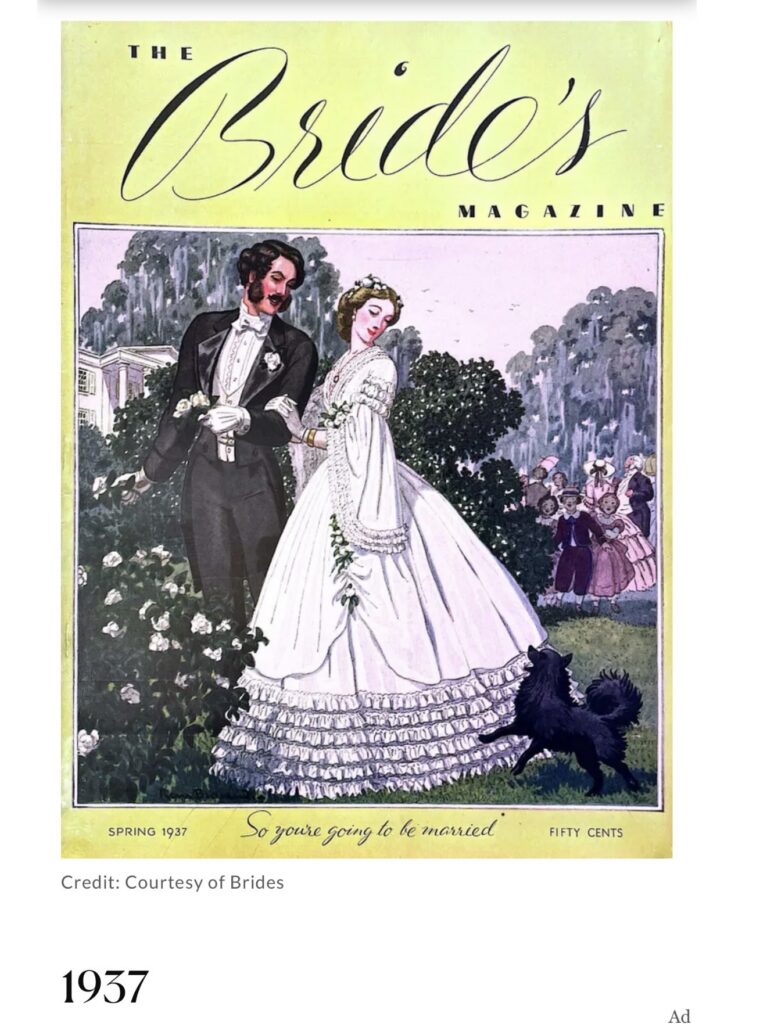


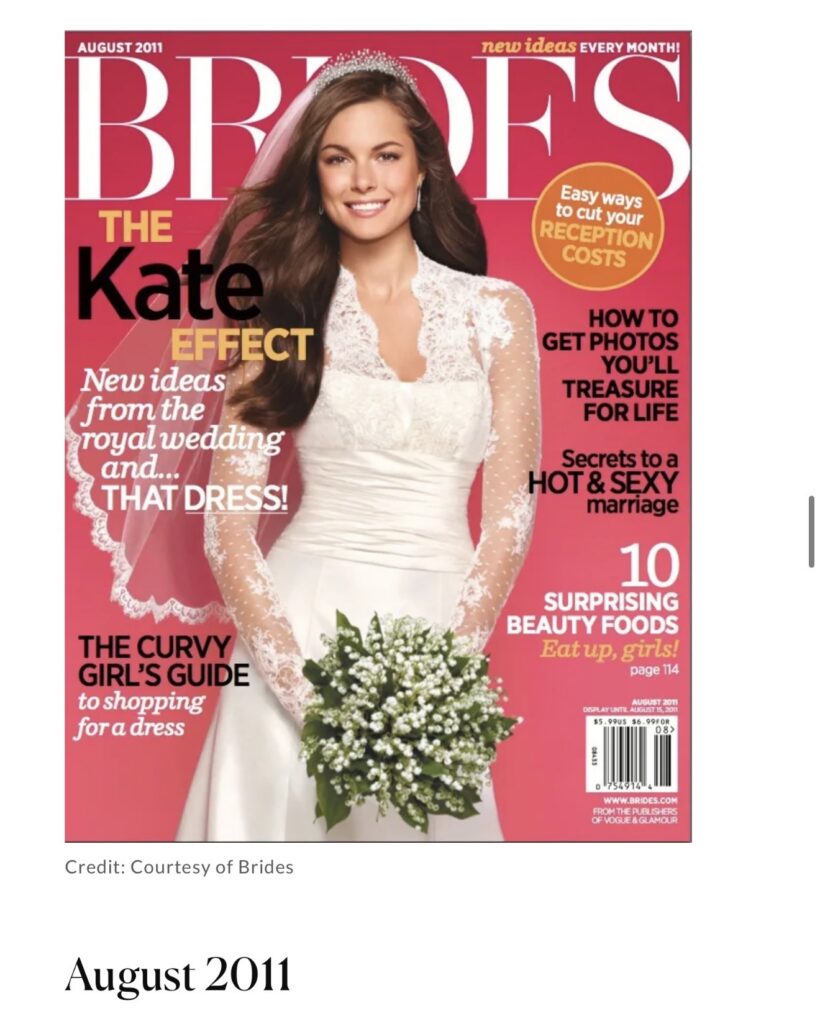
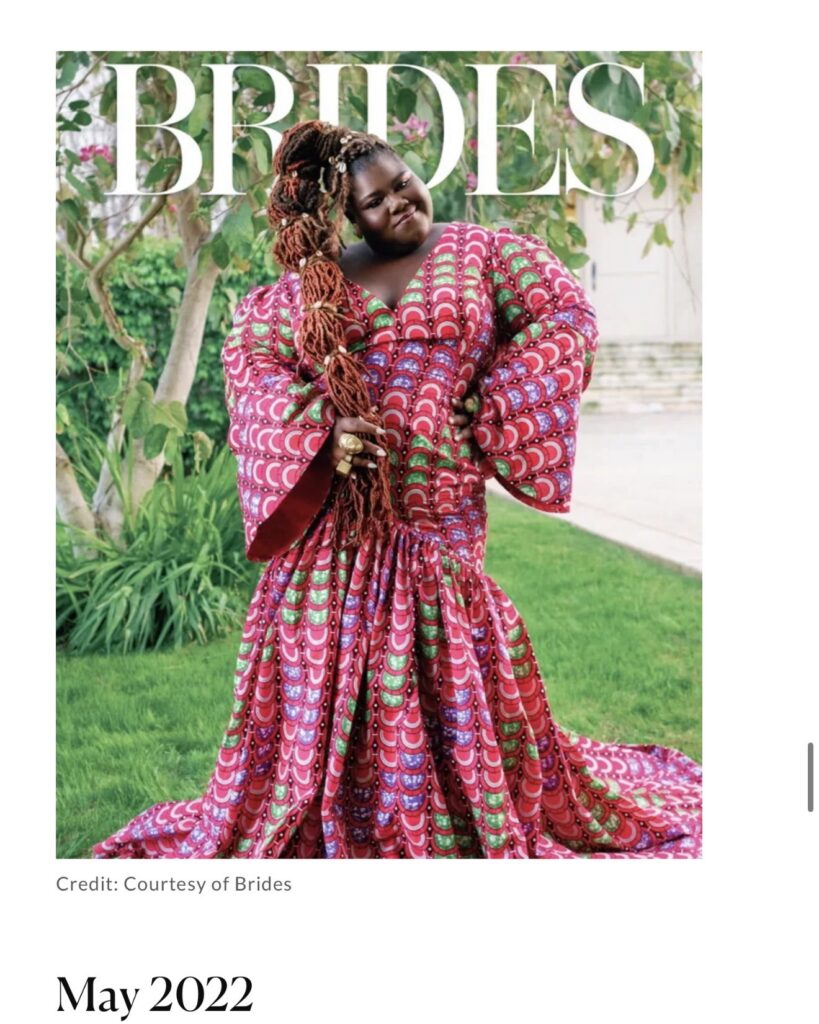
That doesn’t mean people didn’t care about their weddings. They obviously did. It just meant that a meaningful wedding didn’t automatically come with a huge production budget. And that distinction is really important.
Then the traditional wedding became more accessible
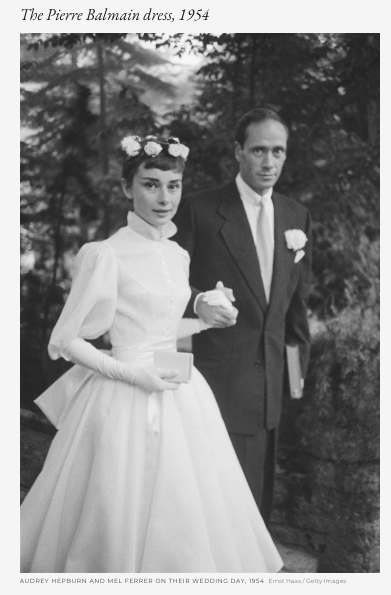
The 1950s changed a lot of this.
America was coming out of World War II, prosperity was increasing, and the white dress, engagement ring, wedding cake and formal reception became accessible to more middle-class families. BRIDES describes the 1950s as the period when the modern traditional wedding really started taking shape. Movies like Father of the Bride helped reinforce the idea of the big, beautiful wedding, and the wedding industry was growing alongside it. (BRIDES)
And this is where I think the line between “tradition” and “marketing” starts getting blurry. A lot of the things we think of as timeless wedding traditions are actually relatively recent additions (like within a generation) or were heavily shaped by the businesses selling them.
Historian Vicki Howard has written extensively about this in Brides, Inc., which looks at the development of the American wedding industry throughout the 20th century. Her research shows how bridal magazines, retailers, caterers, department stores, designers and other businesses helped create an increasingly standardized wedding experience and turned more and more parts of the celebration into things you could buy. (Oxford Academic) Celebrities like Audrey Hepburn’s weddings made headlines and inspired new design choices.
And once there’s an industry built around weddings, there’s obviously going to be more stuff to buy.
The 1960s and 70s were actually pretty different
This is another thing I found interesting.
The 1960s and 1970s weren’t just a straight line toward the giant weddings we have now. BRIDES describes this period as much more relaxed and rebellious. Couples wrote their own vows, had garden weddings, got married in less traditional settings and generally moved away from some of the formality of previous decades. (BRIDES) This is actually what we’re seeing now and since 2020.
And a lot of these weddings were still happening in churches, homes, gardens and community spaces.
Then the 1980s happened. And things got big. Really big.
Enter the era of “more is more”
Princess Diana’s wedding in 1981 probably doesn’t get enough credit for how much it influenced wedding culture.
The dress. The train. The cathedral. The flowers. The carriage. The sheer scale of the whole thing.
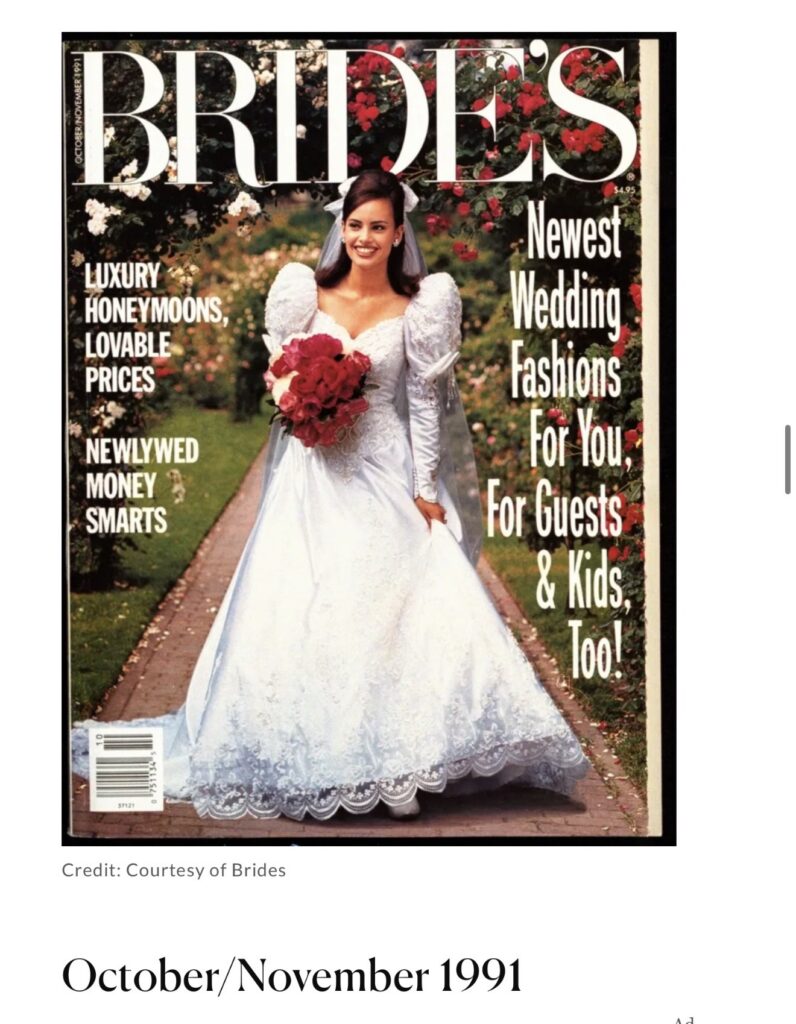
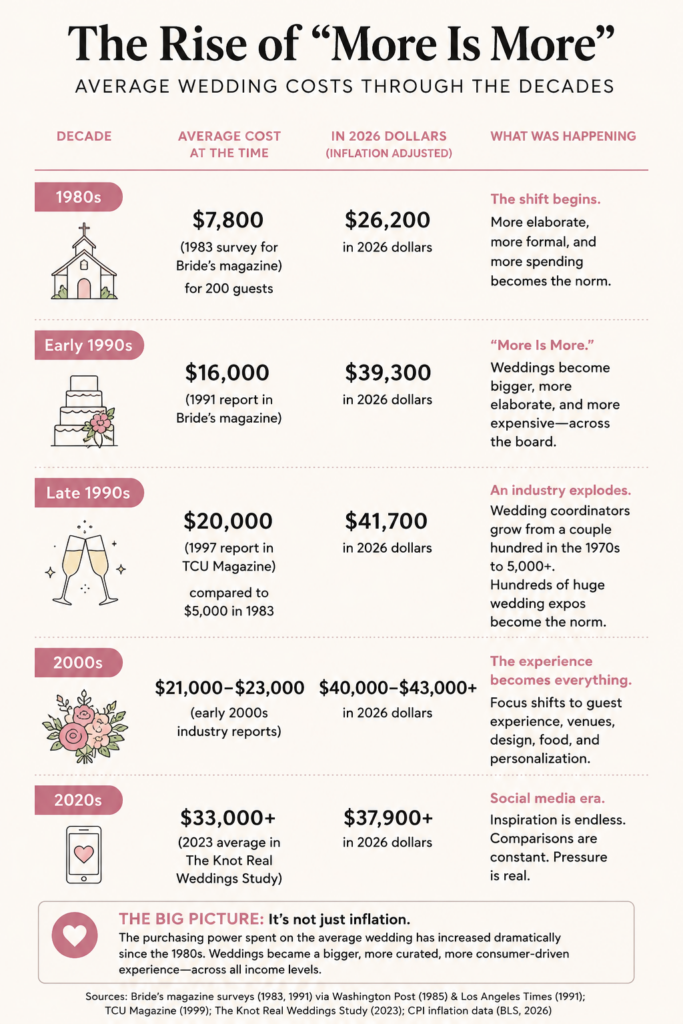
BRIDES describes the 1980s and early 1990s as the era of “More Is More,” and when you look at what happened to wedding spending during those years, you can actually see that shift happening. In 1983, a survey for Bride’s magazine put the average wedding cost in America for 200 people at about $7,800. That’s roughly $26,200 in 2026 dollars.
By 1991, Bride’s was reporting that the average couple spent roughly $16,000 on their wedding, or about $39,300 in 2026 dollars. That’s a little more than 50% higher in real purchasing power than the 1983 figure, even after accounting for inflation.
And by 1997, TCU Magazine reported that the average wedding cost in America had reached about $20,000, compared with roughly $5,000 in 1983. That’s about $41,700 in today’s money. The same article described an exploding wedding-planning industry, with the number of wedding coordinators growing from a couple hundred in the 1970s to an estimated 5,000 or more, along with hundreds of enormous wedding expos taking place every year.
So this wasn’t simply a case of everything getting more expensive. The wedding itself was becoming a much bigger consumer experience. A $7,800 wedding in 1983 and a $16,000 wedding in 1991 don’t sound quite as dramatic when you’re looking at the raw numbers. But when you put both into 2026 dollars, you’re looking at roughly $26,000 versus $39,000. In less than a decade, the purchasing power Americans were putting toward the average wedding had increased dramatically.
That’s a pretty huge jump in a relatively short period.
And even after adjusting for inflation, it’s still a significant increase. The Christian Science Monitor looked at the numbers and found that the inflation-adjusted cost of an average wedding rose substantially throughout the 1980s. (Christian Science Monitor)
So weddings weren’t simply costing more because everything cost more. People were spending more on the wedding itself and upping the guest experience even in the middle classes.
And then there’s the cake and punch thing
This might be my favorite part of this entire rabbit hole. Because when you hear someone say, “My parents just had cake and punch after their wedding,” it can sound like they had some unusually simple little celebration. But literally, they had cake a punch and that was the whole reception.
Apparently, that really wasn’t that unusual. One Baptist minister wrote about his 1985 wedding and described having 150 people in the church fellowship hall with cake, punch and light snacks. He specifically described it as a typical 1985 wedding among his friends, with similar celebrations being common in their community. (Baptist News Global)
There are also newspaper wedding announcements from the 1980s describing church receptions where guests were served cake and punch. And I think that’s important because in 1985 the average wedding was not a full cocktail hour, open bar and catered dinner. It was more of the Elopement Style we’re seeing make a huge resurgence right now with the downturn of the economy,
Today, if you told someone they were having 150 guests and serving cake and punch in a church fellowship hall, they might assume you were having an extremely budget-conscious wedding or even deem that tacky or a gift grab. That tells us something.
We didn’t just add prettier flowers. We added a whole lot of event.
Think about what a typical wedding can look like now:
Ceremony at a venue or church with a floral instal.
Cocktail hour. Passed hors d’oeuvres. Specialty cocktails. Open bar. Dinner. Dessert. Cake. Late-night snacks.
Maybe a champagne tower.
Maybe a raw bar.
Maybe a gelato cart.
Maybe a cocktail hour musician.
Maybe a second dinner at the after-party.
And maybe brunch the next morning.
Again, I’m not complaining. Please give me fun guest experiences! 😂
But it’s interesting to remember that this whole level of hospitality is a relatively recent development. Like within my lifetime (and I’m only in my 30s).
Eric Michael, who started Occasions Caterers in 1986, has talked about watching wedding food change throughout his career. He describes weddings moving from more traditional dinner buffets toward plated meals and increasingly elaborate food experiences through the 1990s and 2000s. (Baltimore Weddings)
The wedding itself became more like a fully produced event.
And then we started building entire venues around producing those events.
The wedding venue thing is fascinating too
Obviously, hotels, country clubs, banquet halls and other reception spaces existed decades ago.
But the sheer number of dedicated wedding venues we have now is a different thing.
There are barns and estates and vineyards and historic homes and garden venues and industrial spaces and luxury hotels and purpose-built wedding venues everywhere.
And they’re designed specifically around the modern wedding:
There’s a ceremony space.
There’s a cocktail hour space.
There’s a reception space.
There’s a bridal suite.
There’s a groom’s suite.
There’s a catering kitchen.
There’s a place for the band.
There’s a place for the DJ.
There’s a perfect spot for the ceremony arch.
It’s an entire ecosystem.
And that ecosystem makes sense because we’ve created a culture where the wedding itself is expected to be a major production.
Then we started watching everyone else’s weddings
This is probably where things really got out of hand. With the introduction of the internet in the 90s, we now had access to the lives of the rich and famous like never before.
Television.
Wedding magazines.
The Knot.
Wedding blogs.
Pinterest.
Instagram.
TikTok.
At some point, we went from seeing a handful of weddings in our actual community to seeing thousands of weddings from around the world. And the weddings we were seeing were the elaborate ones. The ones vendors want to share. The ones publications want to feature. The ones that photograph well. The ones with the $100,000 floral budget. The ones with the incredible venue and the dress and the fireworks and the champagne tower and the custom dance floor.
And when you see enough of those, they start to feel normal. A luxury wedding started looking like a basic requirement in the 90s.
Which brings me back to my own job
I’m a wedding photographer. I photograph weddings with an average of a $100,000 budget. These are nice weddings even by todays standards! And I don’t think that’s a bad thing. There are couples who have the money and genuinely love throwing a big party. They want to feed 200 people an incredible meal. They want a beautiful venue. They want flowers everywhere. They want live music. They want the whole thing.
Cool.
Have the $100,000 wedding. The wealthy have always spent their money on celebrations. That’s not new. What feels new to me is the pressure for everyone else to feel like they’re supposed to recreate that experience even if the funds aren’t there. And that’s where I think we’ve maybe lost the plot a little.
You don’t have to afford the wedding you see online
If you have $25,000 to spend, you don’t have to figure out how to make it look like a $100,000 wedding.
You can have fewer guests. You can skip the things you don’t care about. You can get married somewhere inexpensive and put the money toward an amazing dinner. You can have a backyard wedding. You can have cake and punch. You can spend the majority of your budget on photography because those memories matter most to you. You can have the giant party if that’s what you actually want. There are so many ways to get married.
And historically, people have been doing exactly that.
Middle-class families found ways to celebrate within their means. Wealthier families spent more. Sometimes the celebration was elaborate. Sometimes it was incredibly simple.
Both were weddings.
If I could give you one piece of big-sister advice as a wedding photographer, it would be this: please don’t spend money you don’t have on a wedding because you think you’re supposed to.
I love the fancy stuff. I really do. Give me the beautiful venue and the flowers and the amazing dinner and all the pretty details. But I don’t want you looking at weddings on Instagram and feeling like yours is somehow less important because you can’t afford to recreate what you’re seeing.
Your people aren’t coming because of your tablescape. They’re not going to remember whether you had the right chairs or a champagne tower or the exact flowers that were trending that year. They’re coming because they love you. They want to see you get married, celebrate with you, eat some good food, dance, laugh, probably cry a little, and be part of this really important moment in your life.
So spend your money on the things that actually matter to you. If that’s beautiful flowers, amazing. If it’s feeding everyone an incredible meal, great. If it’s photography because you really care about having those memories, I’m obviously very into that. And if it’s keeping the whole thing simple so you can actually enjoy your wedding without worrying about the bill afterward, that’s just as valid.
You don’t have to buy the whole wedding industry to have a beautiful wedding. And you definitely don’t have to go into debt trying to prove that your wedding was worth celebrating. Your people already think you’re worth celebrating. That’s why they’re coming.
P.S.
One thing I should probably mention about my sources: a lot of the historical wedding information I found came from Christian organizations and publications. That isn’t because this is a Christian argument, or because I’m trying to make a point about religion. It’s largely because, until pretty recently, churches were where a huge percentage of American weddings actually happened, so churches and religious organizations were documenting weddings, marriage customs, receptions and changing attitudes toward marriage in a way that the modern wedding industry simply wasn’t yet doing. For example, a 1980 Christian Science Monitor report found that 75% of first-marriage brides wanted a religious ceremony in a church, chapel or synagogue, and a 1985 firsthand account describes a church wedding with 150 guests followed by cake and punch in the church fellowship hall.
So you’ll notice some of my sources are Baptist, Christian or otherwise religious publications. The sources don’t reflect my personal views, and they aren’t being used to make a religious argument. They’re historical records from people and institutions that happened to be documenting the wedding culture of their time. And, honestly, the fact that churches were such a central part of American wedding culture is itself part of the story. By 2022, Christianity Today reported that most American weddings were no longer held in churches, with the share having fallen substantially from just over 40% as recently as 2009. That shift is pretty substantial when you think about it. We went from churches being the default wedding venue to having an entire industry of purpose-built wedding venues in just one generation.
